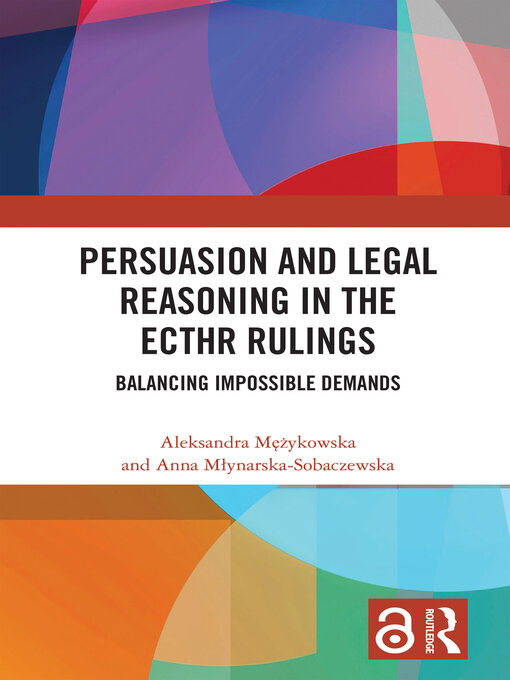
This book analyses the case law of the European Court of Human Rights (ECtHR) from the point of view of argumentative tools used by the Court to persuade the audience – States, applicants and public opinion – of the correctness of its rulings. The ECtHR judgments selected by the authors concern justification of some of the most difficult issues. These are matters related to human life, human dignity and the right to self-determination in matters concerning one's private life. The authors looked for paths and repetitive patterns of argumentation and divided them into three categories of argumentative tools: authority, deontological and teleological. The work tracks how ECtHR judges aim to find a consensual, universal and, at the same time, pragmatic and axiologically neutral narrative on the collisions of rights and interests in the areas under discussion. It analyses whether the voice of the ECtHR carries the overtones of an ethical statement and, if so, to which arguments it appeals. The book will be of interest to academics and researchers working in the areas of jurisprudence, human rights law, and law and language.
- Always Available Kids E-books
- Available now
- Most popular
- New eBook additions
- New kids additions
- New teen additions
- Try something different
- Lucky Day E-books
- See all ebooks collections
- Always Available Audiobooks
- Available now
- Most popular
- New audiobook additions
- New kids additions
- New teen additions
- Try something different
- Grab Them While You Can
- See all audiobooks collections
- Popular Magazines
- Just Added
- Cooking & Food
- Craft Inspiration and Ideas
- Fashion
- Health & Fitness
- Home & Garden
- Kids & Teens
- News & Politics
- New Magazines
- See all magazines collections